

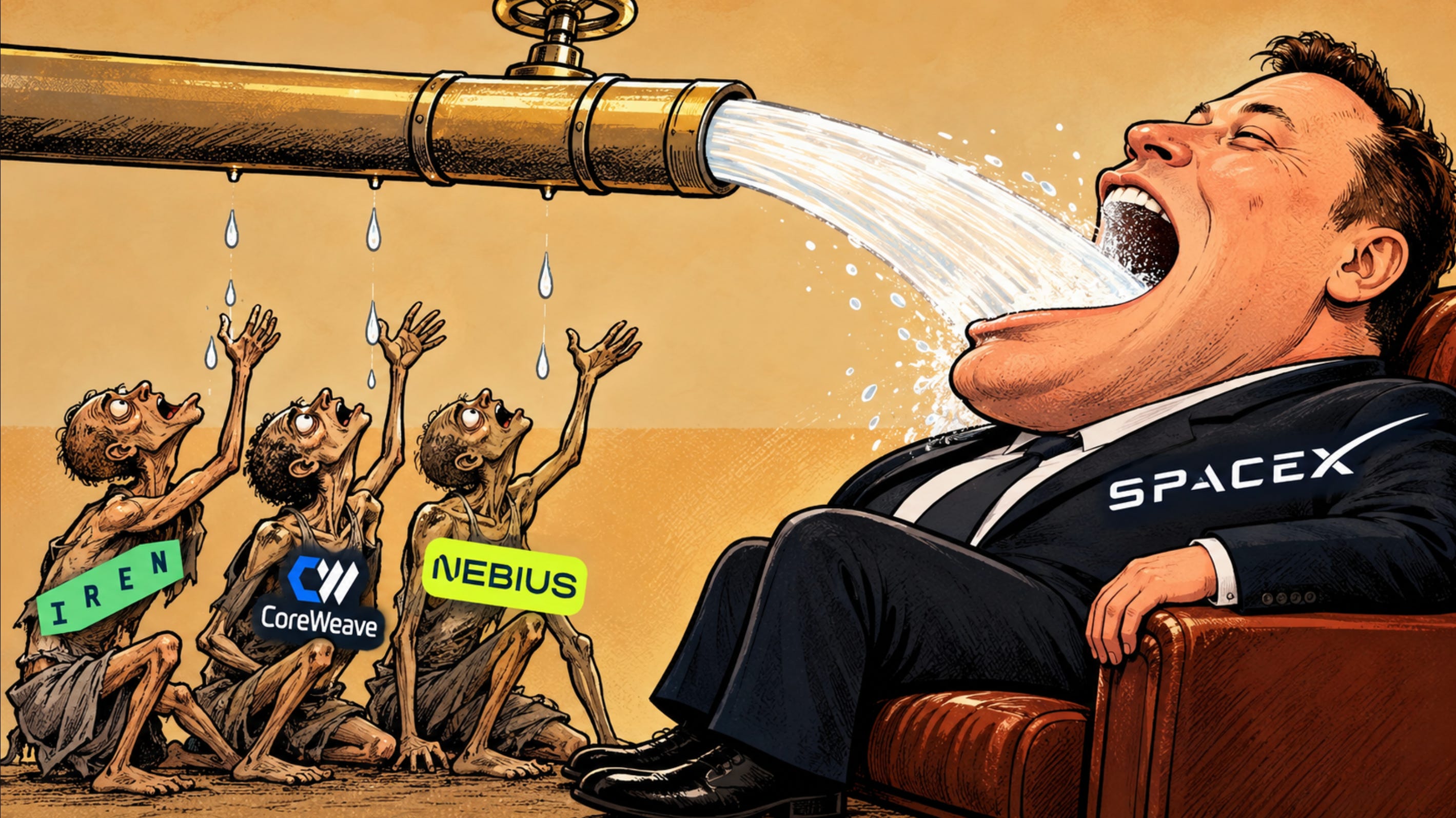
Neoclouds are on everyone’s lips, and after Elon Musk’s recent comments, the debate is more heated than ever.
An already challenged investment theme is now becoming the punching bag of the entire AI trade. With inflation fears mounting and diesel prices offering no relief, the criticism continues to intensify.
Today, I want to focus on the closure of debt markets to neoclouds, what this means for their survival, and the risks investors in these companies should be concerned about.
In this article, I’ll examine the current situation, present arguments from both sides, and explore how individual companies could be affected by this new era of tighter financing.
The Financing Tap Has Run Dry
Over the last two years, lenders have been eager to finance neocloud projects. Capital has poured into these companies, and the numbers today are astonishing.
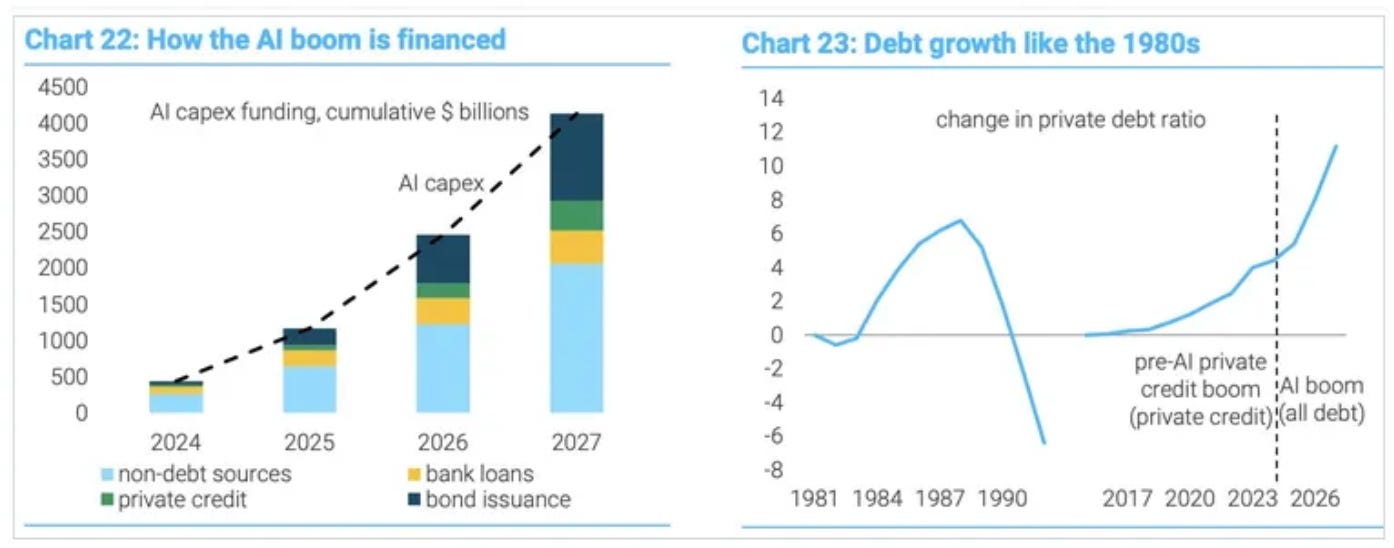
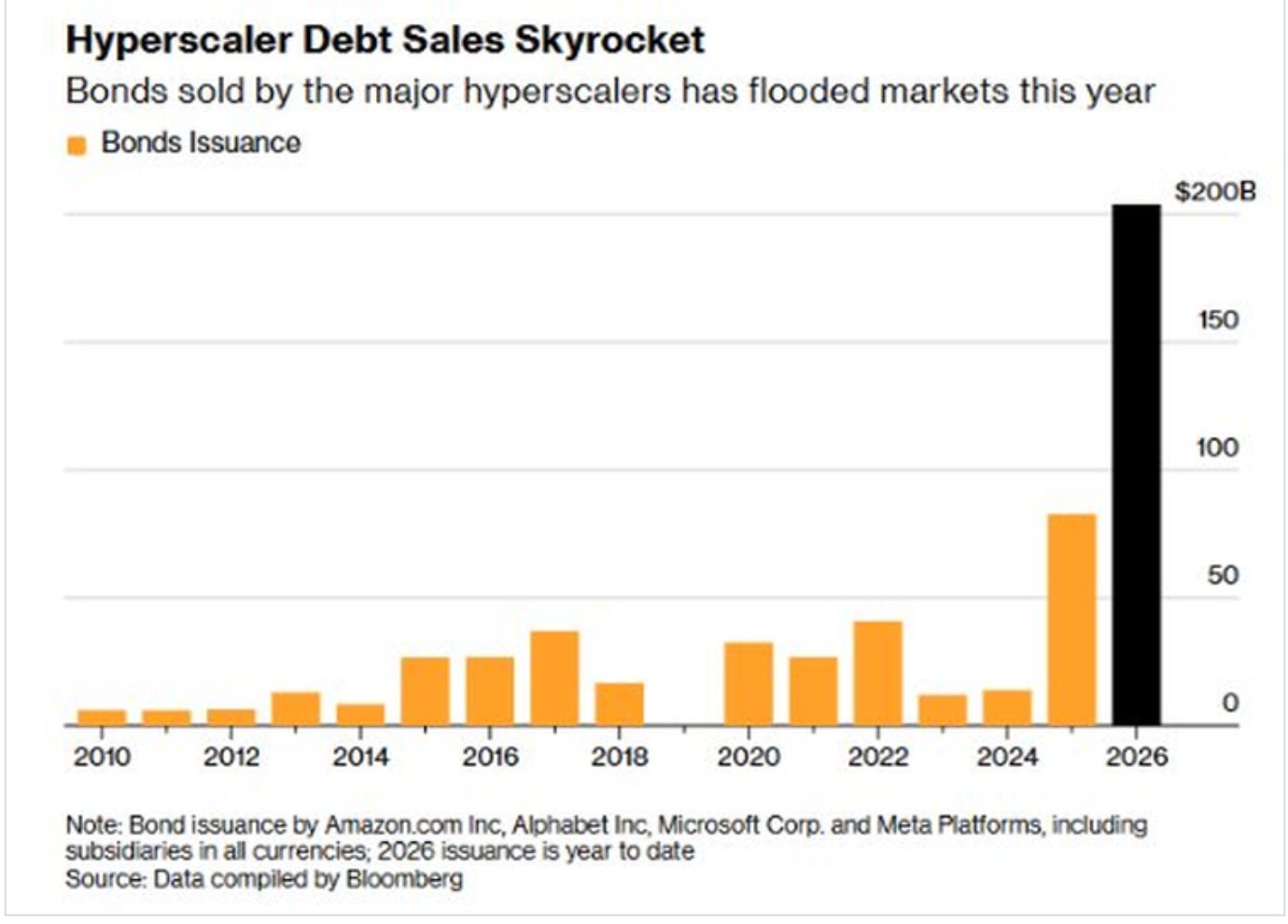
However, with interest rates rising, 10-year U.S. Treasuries yielding 5%, and an AI industry reaching a scale where discussions now involve trillions rather than billions, lenders are becoming increasingly selective.
The industry now requires a coordinated financing effort from across the financial system, a situation that feels all too reminiscent of the 2007 financial crisis to more risk-conscious institutions, which would rather direct their capital toward safer hyperscalers:
Elon Musk: Playing His Cards
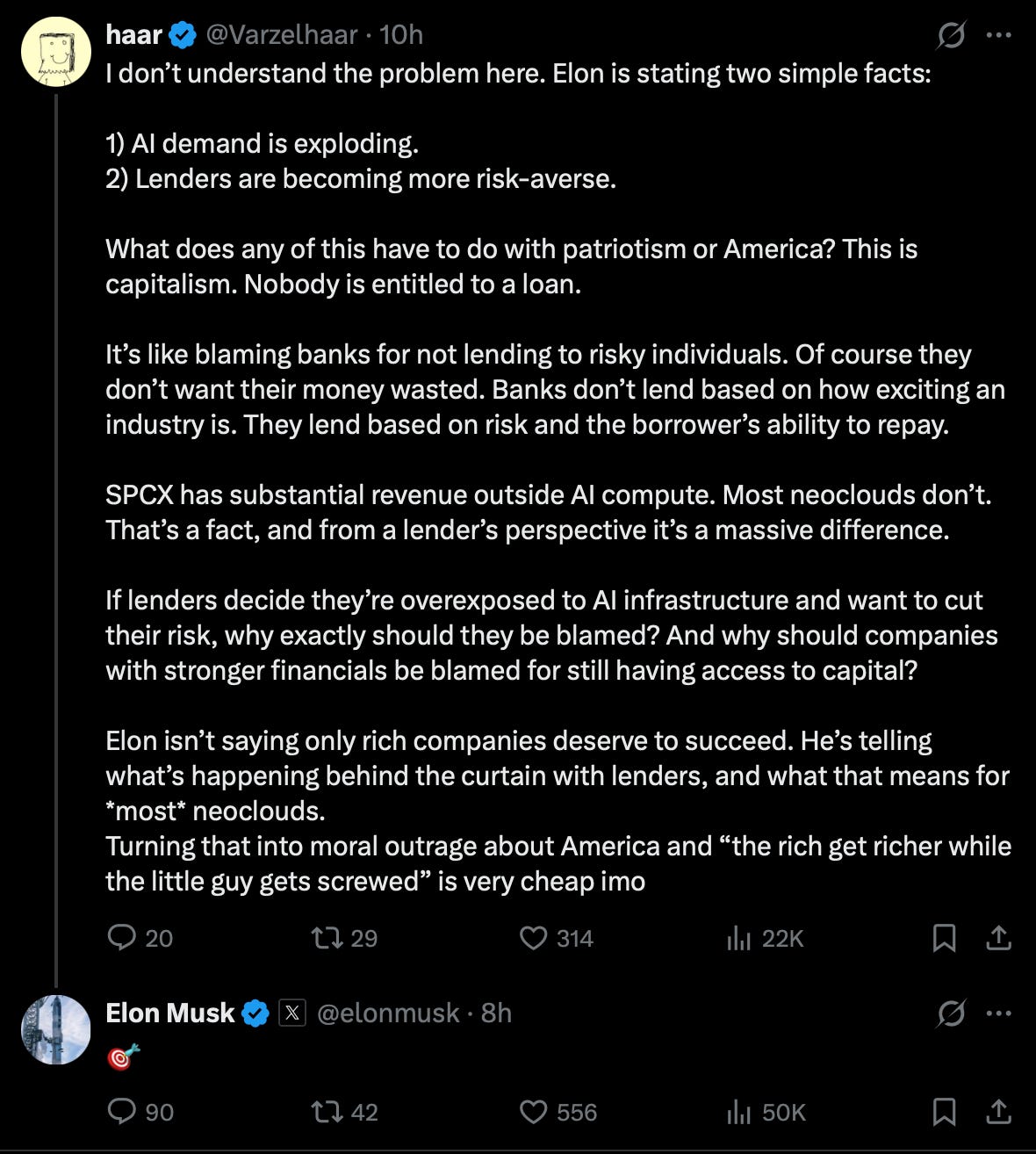
Elon Musk argues that SpaceX is in a more favorable position because it isn’t solely an AI cloud provider. It also has Starlink, a profitable business, alongside its rocket operations, providing financial support beyond AI.
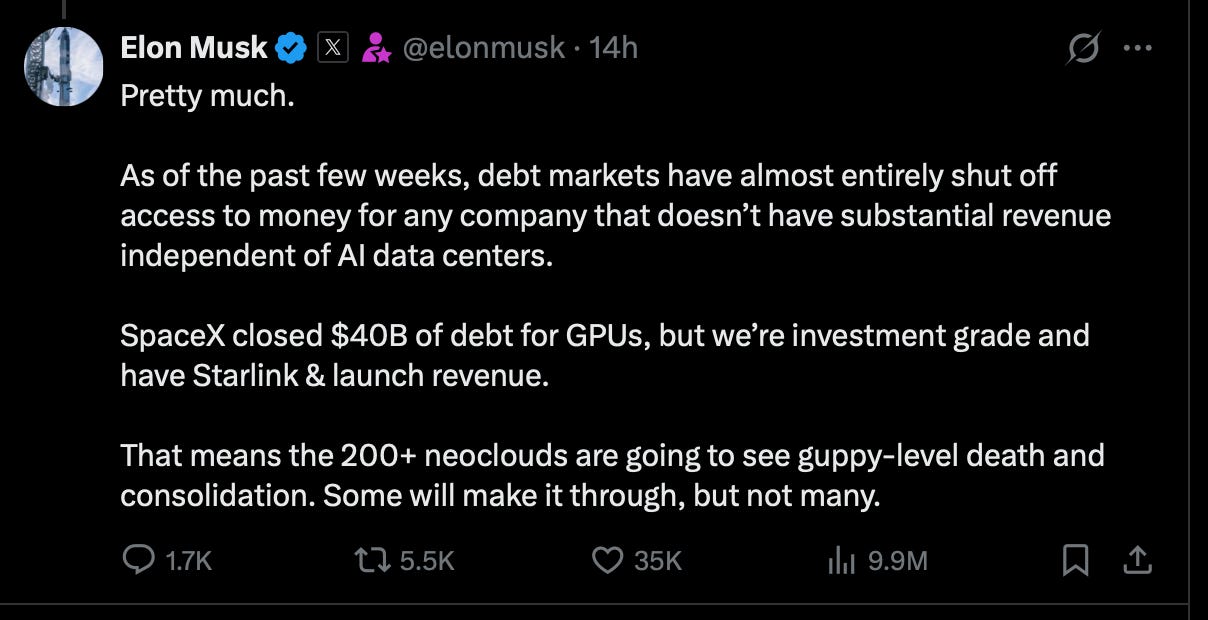
He argues that this will lead to the collapse of more than 200 neoclouds that, being in a weaker financial position, won’t be able to survive this neocloud winter.
However, how credible is this argument?
For starters, SpaceX’s $40B financing deal hasn’t closed yet. On October 24, SpaceX signed a binding commitment letter for a master finance lease with an entity managed by Apollo.
Under the agreement, Apollo’s entity would purchase the GPU pods and lease them to SpaceX in tranches of about five years each. Rent would be paid quarterly in advance, with each payment covering one-twentieth of the cost, plus interest at a fixed rate that has yet to be determined.
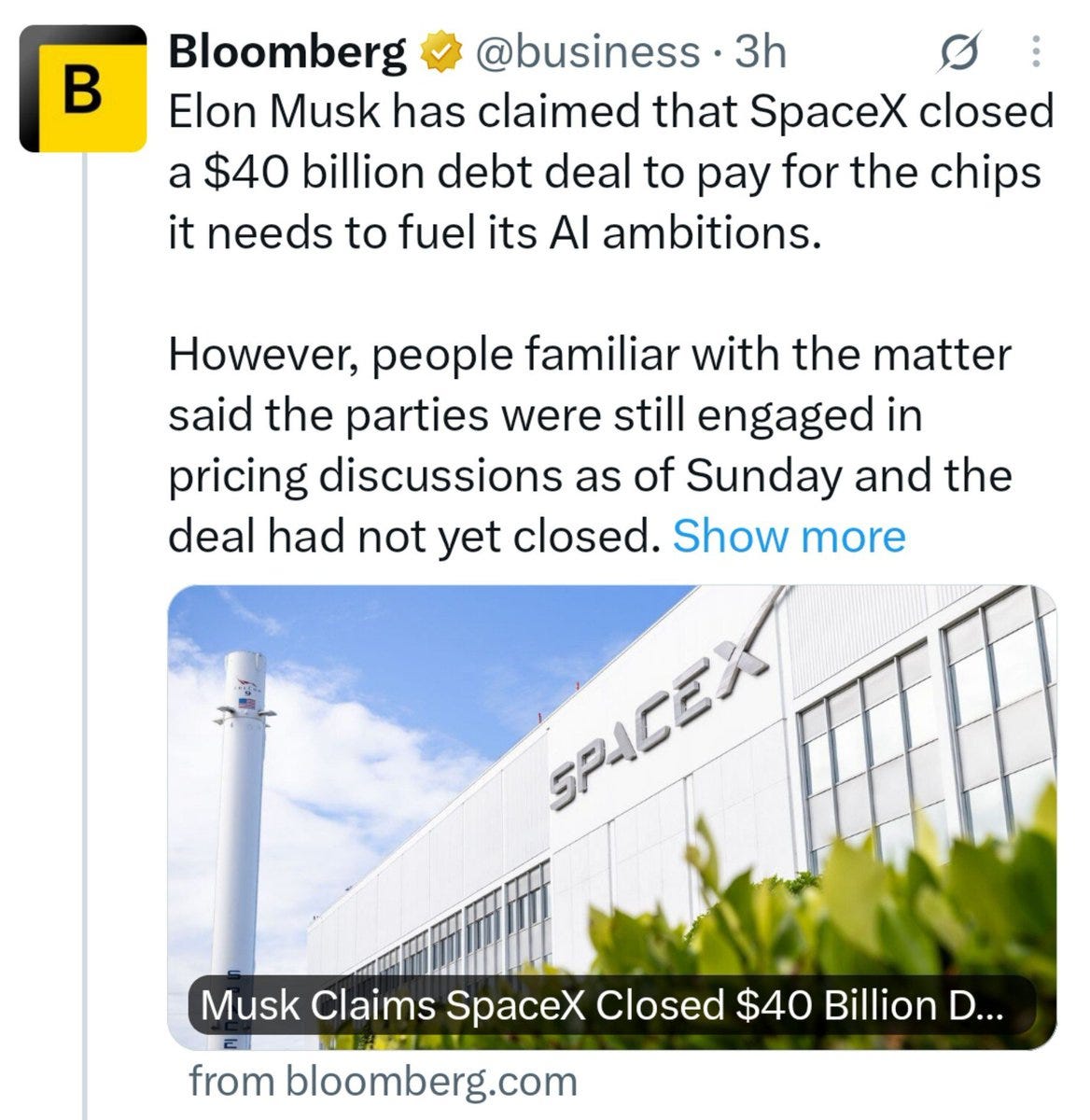
But beyond this $40B financing arrangement, whose full economic terms remain unclear, how credible is the argument that Starlink can support SpaceX’s AI ambitions?
SpaceX generates $10B in annualized operating income from Starlink, although Starlink also requires $6B in annual capex, while its launch business remains unprofitable.
The company’s annualized operating cash flow stands at $37B, against $12B in capex excluding AI, leaving $25B in annualized FCF before AI investments.
However, SpaceX is planning a 10 GW AI buildout in a single year. At an estimated $50B in capex per GW, that would imply $500B in capital expenditures, far beyond what its existing businesses can fund internally.
That’s not to say SpaceX is in a bad position. Its current annualized operating cash flow of $37B compares with $78B in annualized capex, including $66B in AI investments. That leaves negative $41B in annualized FCF, representing a −2% FCF yield at its current $2T market cap.
My broader point is that SpaceX isn’t a hyperscaler when it comes to generating massive amounts of cash. However, when you compare its financial position with that of the neoclouds, you begin to understand where Elon Musk is coming from.
Take Nebius, for example. Its annualized operating cash flow stands at $9B (it hasn’t reported Q3 yet), against $22.6B in annualized capex. That leaves negative $13.6B in annualized FCF, representing a −31% FCF yield at its $43.5B market cap.
A massive difference.
Chamath Palihapitiya: Neocloud Change of Heart
Beyond the growing reluctance of lenders to finance cash-burning neoclouds, other factors are converging to create uncertainty across the AI industry.
Chamath Palihapitiya, in a post endorsed by Elon Musk, described neoclouds as “disorganized and poorly capitalized,” although he acknowledged that “some are better than others.”
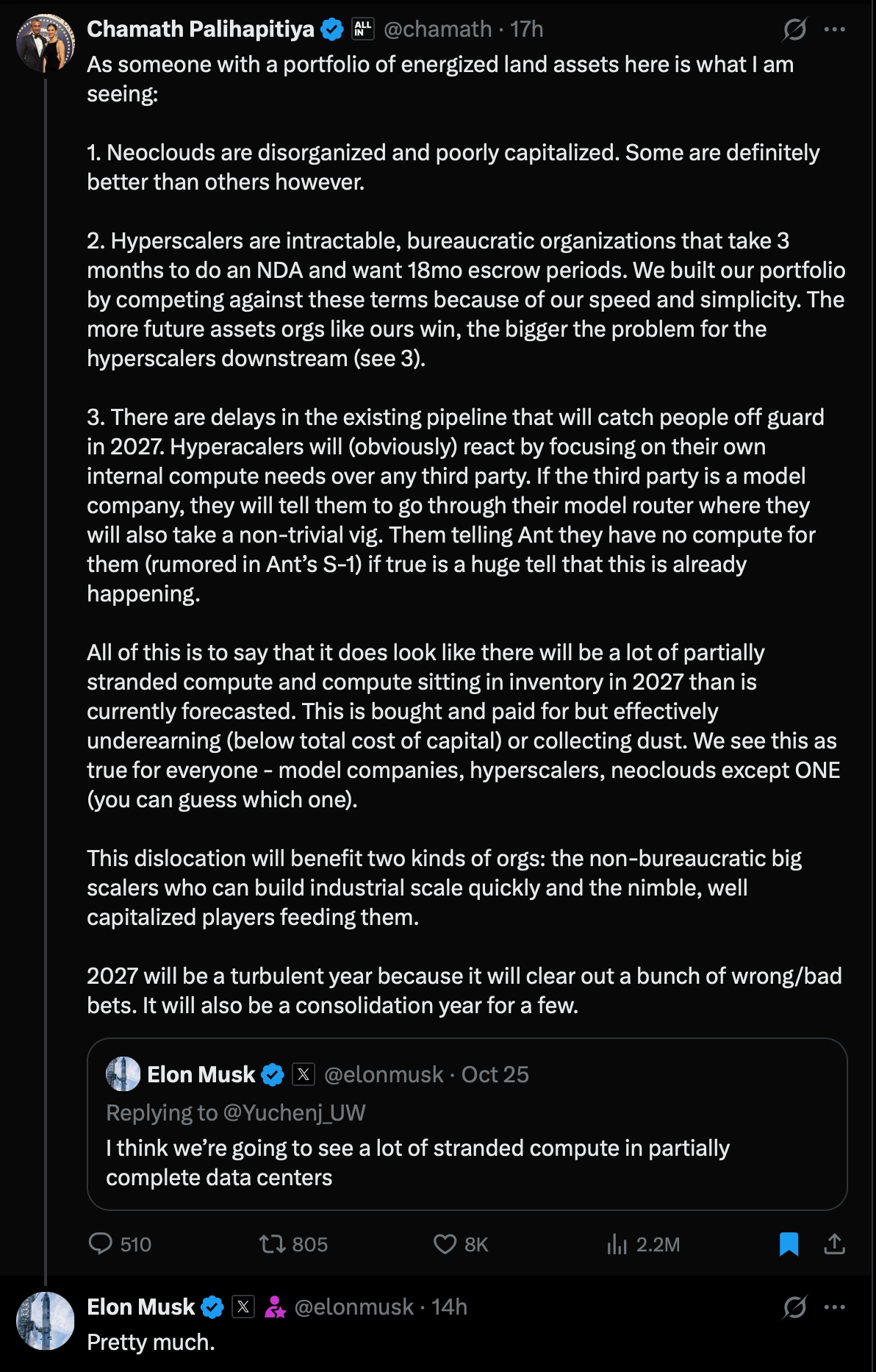
This stands in stark contrast to his post from just a short while ago, when he identified Nebius and IREN as two of the “economic winners” from open-source models gaining market share.
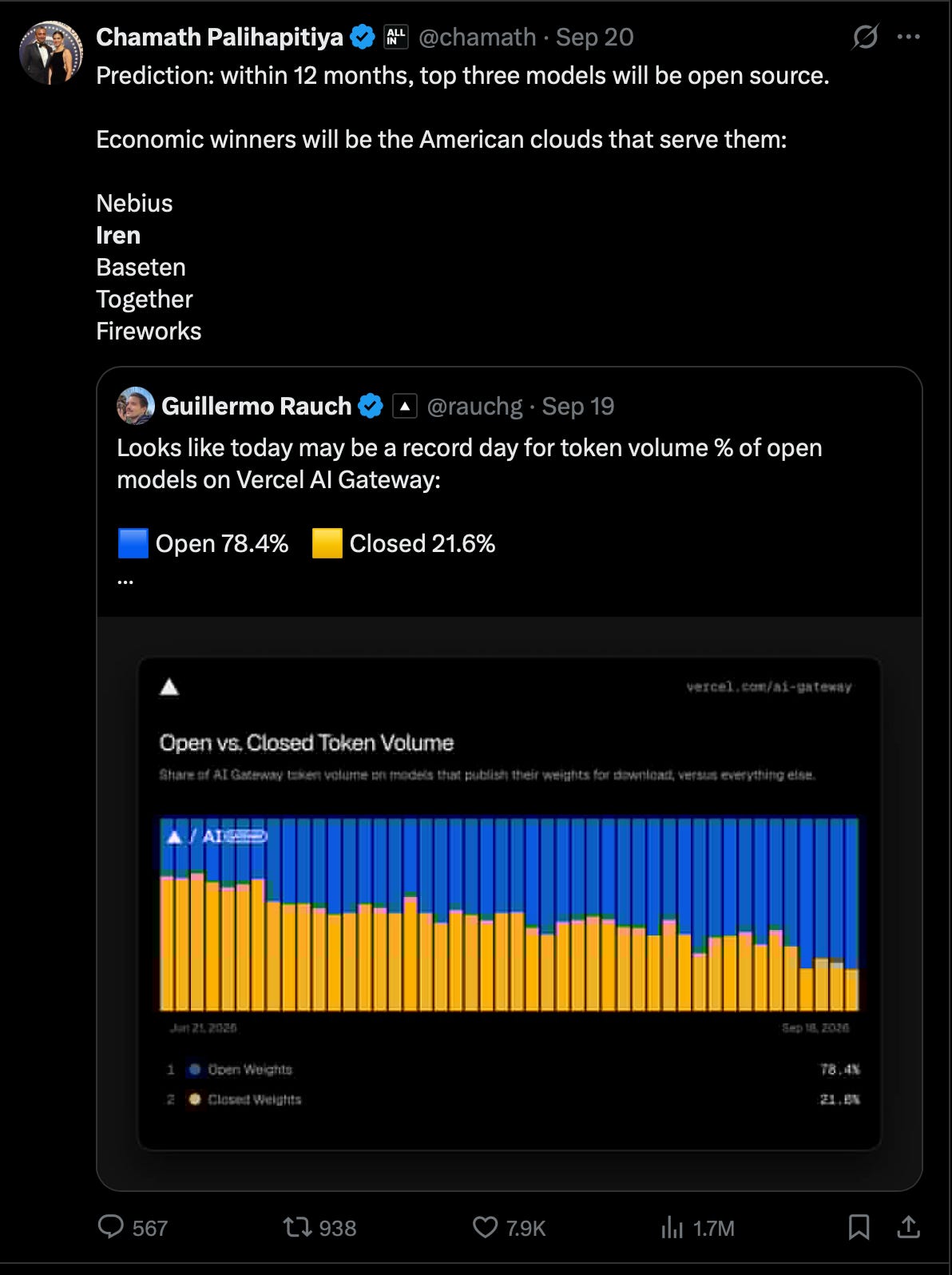
Talking his own book? Probably. However, he also makes some interesting points:
“Hyperscalers are intractable, bureaucratic organizations that take 3 months to do an NDA and want 18mo escrow periods.”
And:
“There are delays in the existing pipeline that will catch people off guard in 2027. Hyperacalers will (obviously) react by focusing on their own internal compute needs over any third party. If the third party is a model company, they will tell them to go through their model router where they will also take a non-trivial vig. Them telling Ant they have no compute for them (rumored in Ant’s S-1) if true is a huge tell that this is already happening.”
This, combined with Musk’s prediction that more than 200 neoclouds could go bust, alongside comments from Amazon and Anthropic about insatiable demand for compute, is, if anything, bullish for the more credible players.
Any supply shock that delays access to GPUs, even as demand remains strong, would create an even greater shortage of compute capacity, exacerbating an already powerful trend:
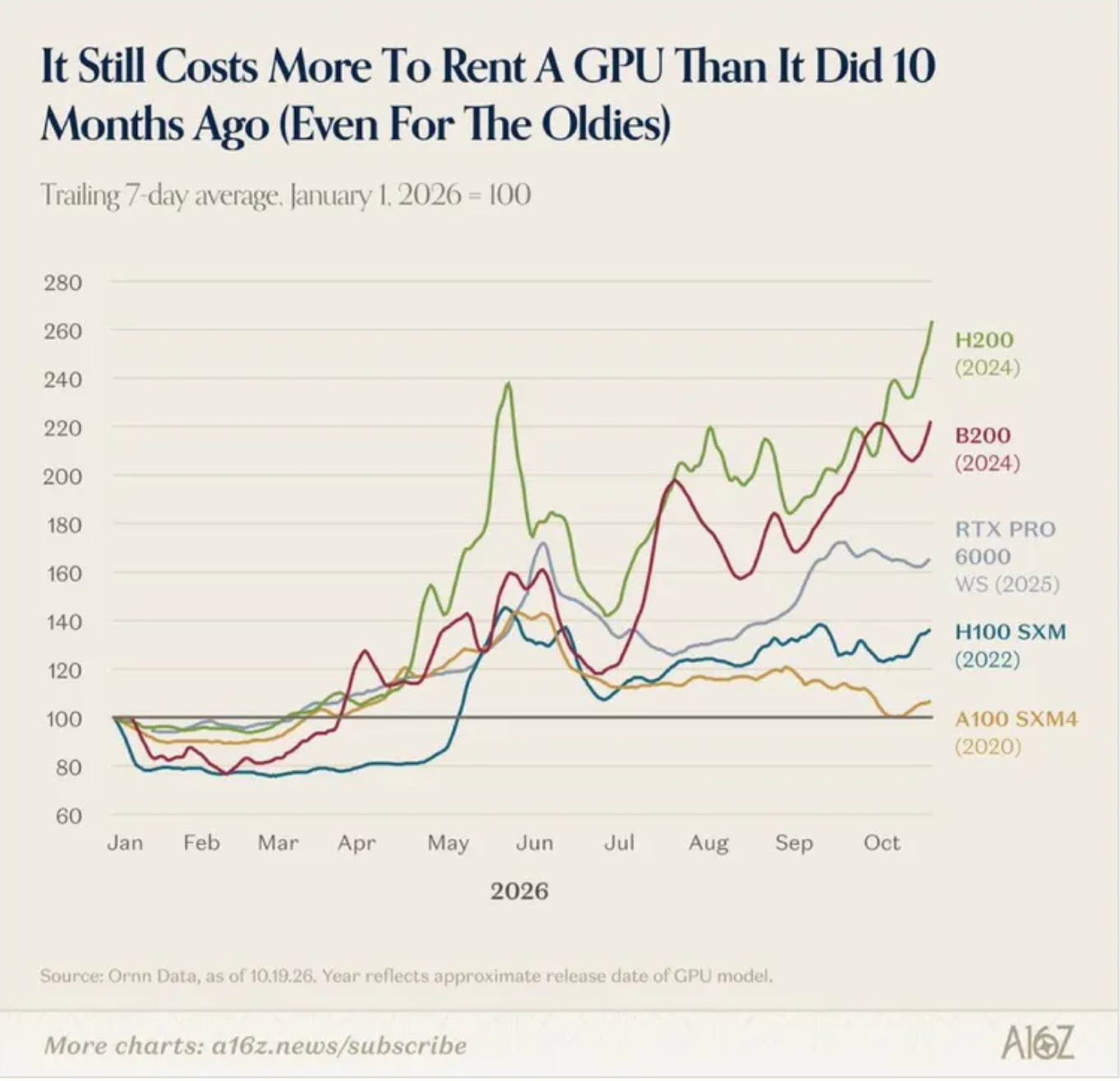
GPU Pricing: The Ultimate Variable
Ben Horowitz, co-founder of a16z, expressed concerns about neoclouds’ high debt levels and warned that a decline in GPU-hour pricing could push them into bankruptcy.
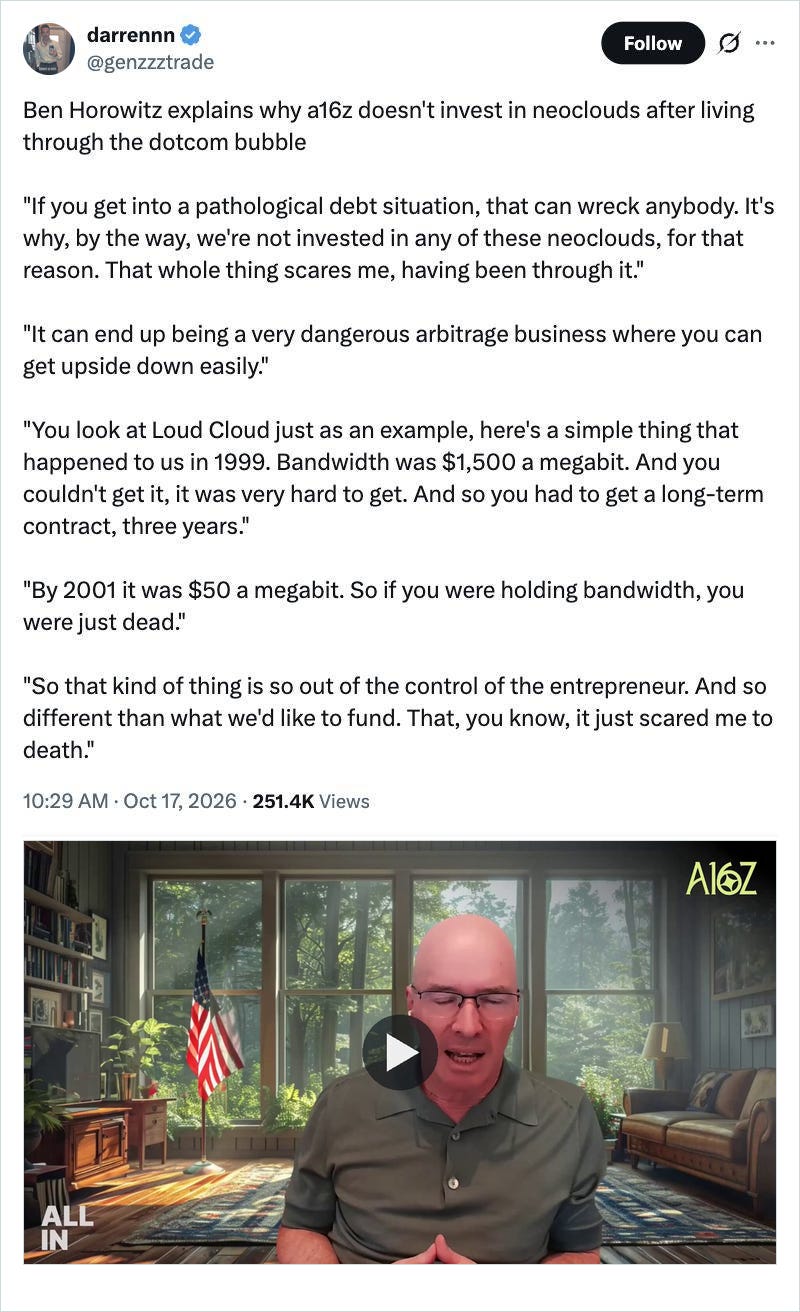
However, everything we’re seeing across the industry points in the opposite direction, raising the possibility that his concerns stem more from past trauma than an unbiased assessment of current market conditions.
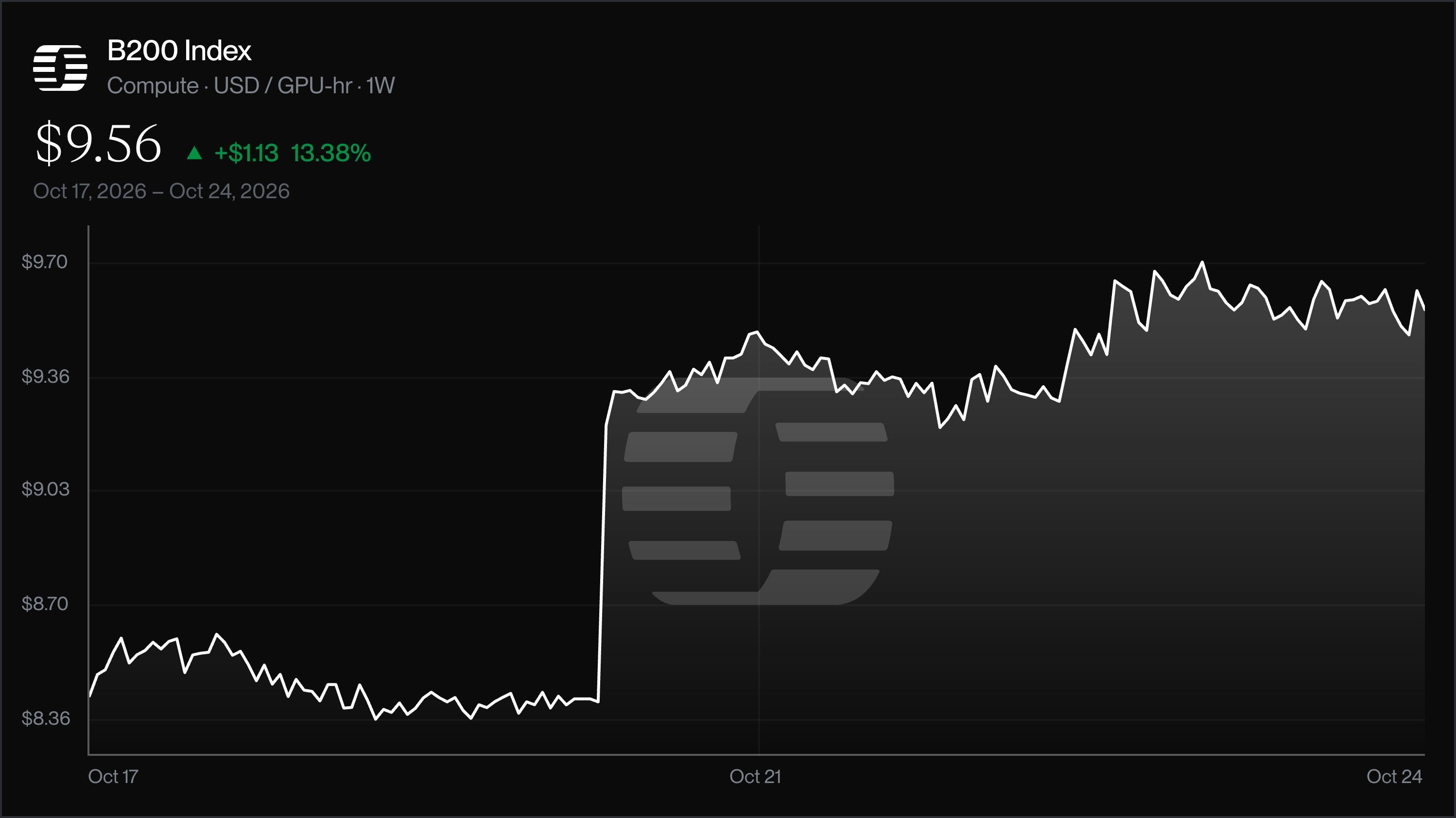
For starters, GPU pricing is moving in the opposite direction, as we’ve already seen. In fact, B200 prices have increased 13% in just the last seven days.
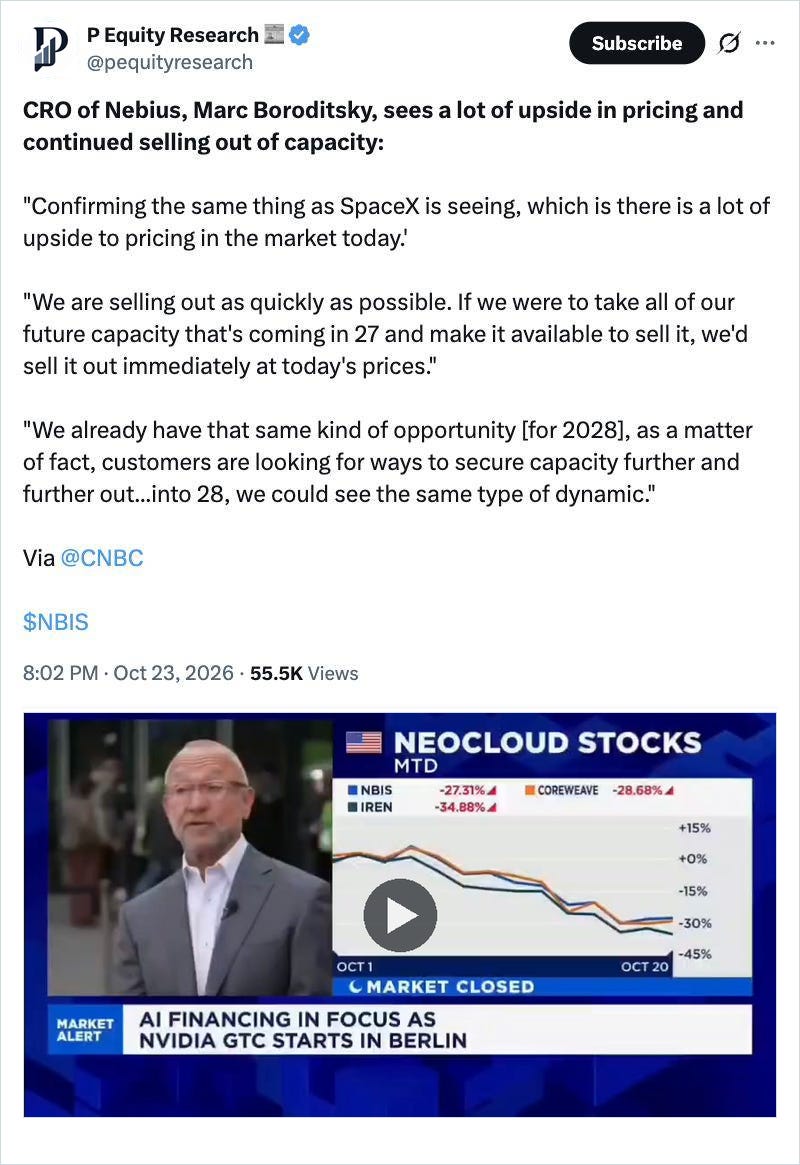
Nebius’ CRO also sees further upside in GPU pricing and expressed confidence in the company’s ability to sell out any additional capacity it brings to market at current prices.
Gavin Baker makes a more convincing, fact-based argument.
He points to DeepSeek as evidence of further upside potential in GPU pricing, suggesting that this could help explain the recent strength in prices.
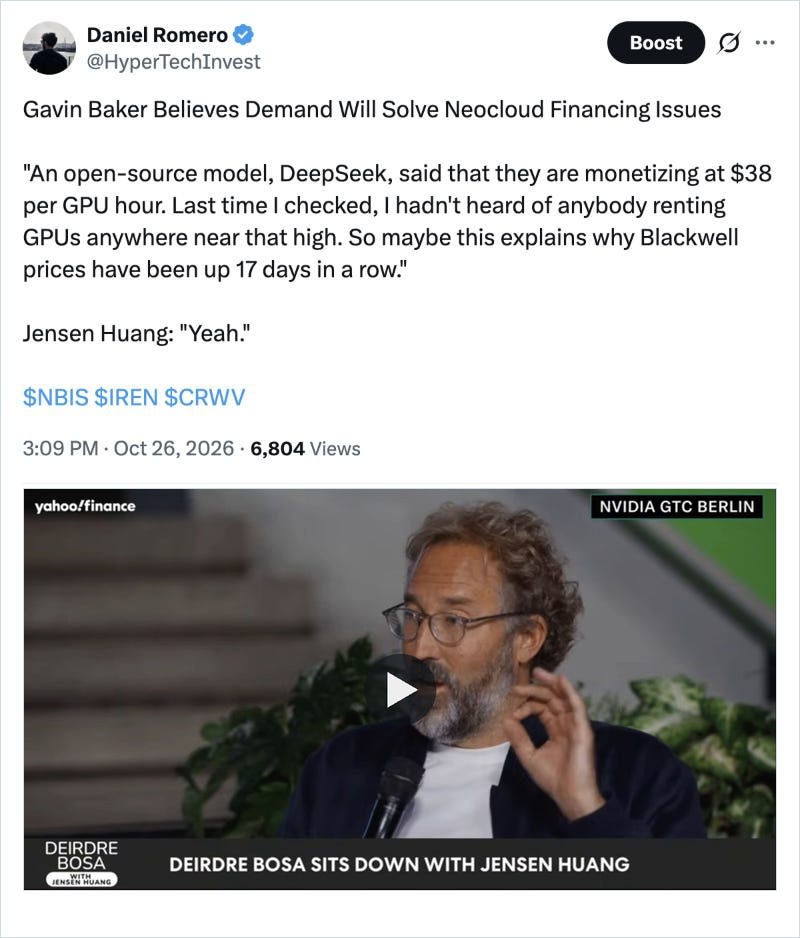
He’s referring to an October 23 demonstration by vLLM, which showed that DeepSeek V4.1 Flash could generate an implied $39 in revenue per GPU-hour on Nvidia GB300 infrastructure, based on DeepSeek’s off-peak API pricing.
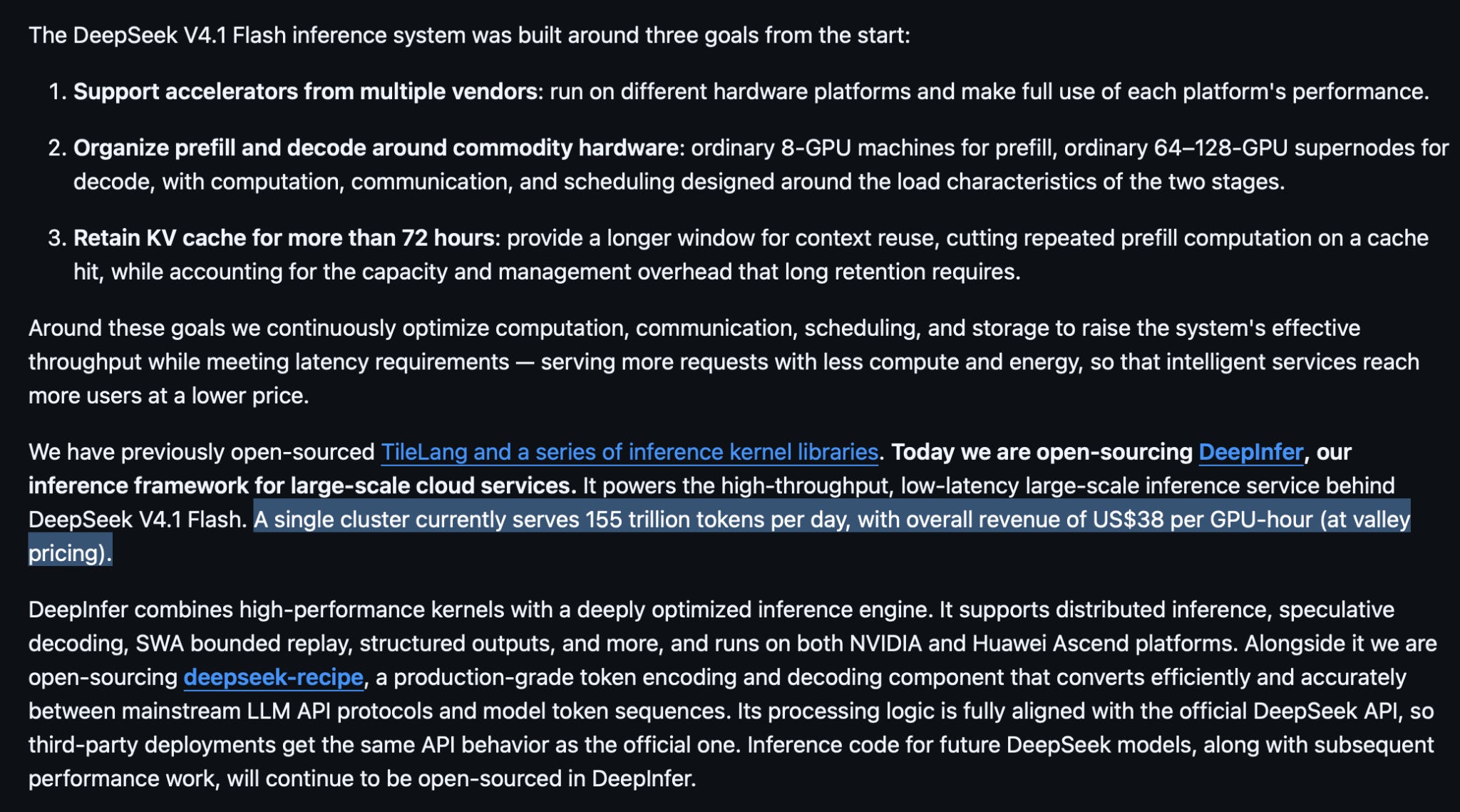
However, DeepSeek is an open model, and if multiple companies can deploy it with comparable efficiency, competition should eventually compress inference pricing, rather than allow operators to retain extraordinary margins indefinitely.
So, while this is a bullish data point, it isn’t enough to suggest that GPU rental rates can keep surging while API providers continue enjoying substantial profits.
Company-by-Company Analysis
Not all neoclouds are the same. Among the most representative publicly traded companies, there are significant differences between Nebius, IREN, and CoreWeave, particularly in their financial positions and exposure to tighter financing conditions.