


Precision Medicine
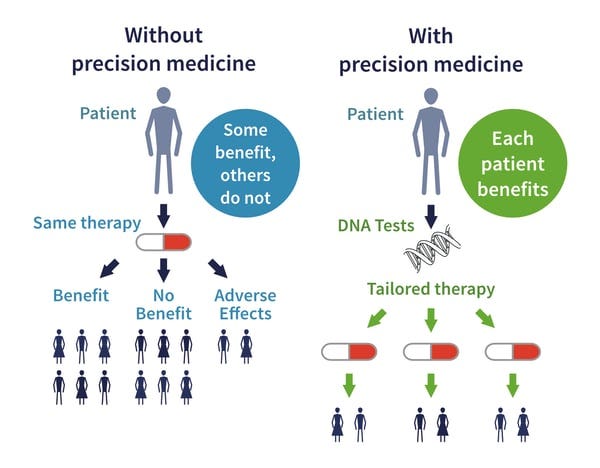
Modern medicine is shifting from a one-size-fits-all model to personalized treatment shaped by each patient’s biology. This shift, known as precision medicine, is being powered by data and artificial intelligence.
Traditionally, doctors treated disease based on population averages. Patients with the same diagnosis often received the same therapy. A lung cancer patient might be placed on a standard chemotherapy regimen, while someone with high blood pressure could receive the same first-line drug as anyone else with similar readings.
That approach worked in many cases, but its limits are obvious. Patients are biologically diverse. A treatment that helps one group may do little for another, or even cause harm. Many prescription drugs are effective in only a subset of patients, which leads to trial-and-error cycles, wasted time, and avoidable side effects.
Precision medicine changes the framework. The concept is simple: treat the patient, not only the disease. By combining genetic, molecular, and lifestyle data, clinicians can better predict which therapy is most likely to work for an individual.
Two breakthroughs made this possible:
Genomic sequencing, decoding DNA to identify disease-driving mutations
AI and data analytics, uncovering patterns across records, scans, and lab results
With these tools, clinicians can identify which subgroups, or even which specific patients, are likely to respond to a given therapy. Instead of giving everyone the same drug and waiting to see outcomes, precision medicine aims to choose the best option upfront.
The impact is clearest in oncology. In the past, many advanced lung cancer patients received chemotherapy by default. Today, genomic testing can reveal an EGFR mutation or an ALK fusion. With that information, doctors can prescribe targeted therapies that address the underlying driver, often with better outcomes and fewer side effects than chemotherapy.
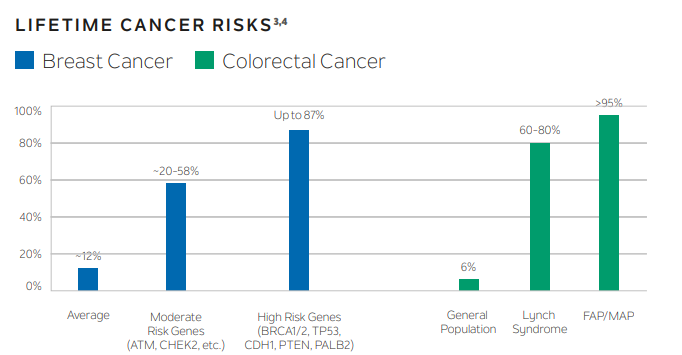
Precision medicine also extends into prevention and diagnosis. A healthy person carrying a high-risk gene for breast or colon cancer can begin proactive monitoring or preventive measures long before symptoms appear. Traditional medicine often acts only after disease is detected.
AI takes this a step further. Healthcare data is enormous, and a single cancer patient record can contain millions of data points. AI can compare an individual profile against large patient populations, helping clinicians identify optimal treatments and flag hidden risks. Algorithms can evaluate tumor DNA alongside imaging such as MRI scans to estimate which therapy has the highest probability of success. They can also help identify patients at elevated risk before symptoms appear.
In short, AI makes precision medicine scalable.

The contrast with traditional medicine is striking. In depression, patients often cycle through multiple medications before finding one that works. Precision medicine can reduce that trial-and-error by indicating which drugs a patient is more likely to metabolize effectively.
In cancer, instead of giving chemotherapy to ten patients and only helping one, precision medicine aims to identify in advance who is likely to respond, and steer others toward targeted therapies or immunotherapy when appropriate.
The outcome is higher response rates and fewer unnecessary toxic treatments.
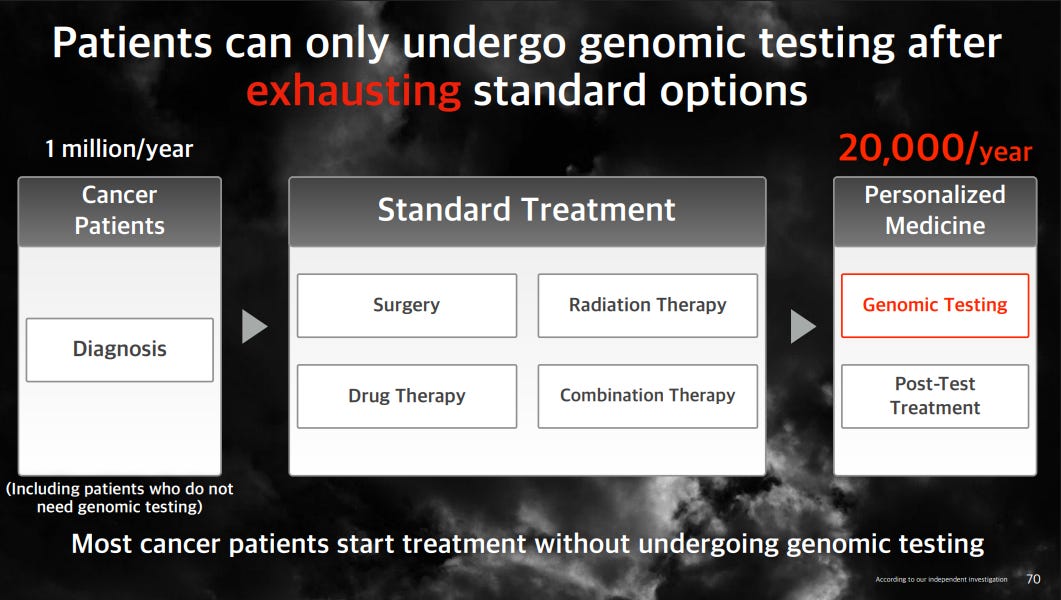
There are also clear economic benefits. While upfront costs such as genetic testing can be higher, precision medicine can reduce total spending by avoiding ineffective treatments and preventing complications. A patient who reaches the right therapy sooner spends less on failed medications and often requires fewer hospital visits.
Pharmaceutical companies benefit as well. Precision-guided trials can focus enrollment on patients most likely to respond, reducing late-stage trial failures and accelerating approvals. Analysts estimate that precision-driven drug development can cut research and development costs by double digits, saving billions across the industry.